Machine learning research portfolio

Yuxuan Liu

I build trustworthy machine learning systems for audio and music.

Ph.D. Candidate at XJTLU · Expected Mar 2027 · Suzhou, China · Open to 2027 research scientist and machine-learning engineer roles

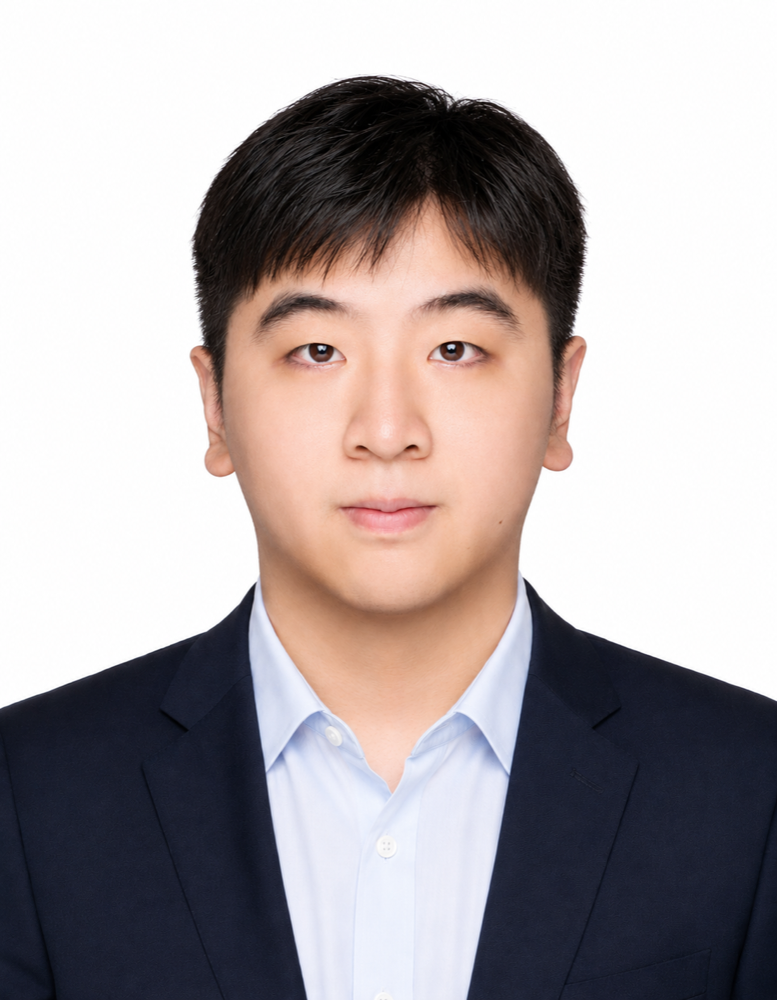
Portrait of Yuxuan Liu
11
Publications
5
First/co-first papers
TRL 5
PoC as Principal Investigator
8 mo.
Changba audio internship

00 · Focus

Research questions with measurable boundaries.

My work spans audio understanding, generative music, privacy auditing, and the path from a research method to a creator-facing system.

Audio UnderstandingListen for structure before making a prediction.

I study music information retrieval, acoustic scene classification, and perceptually aligned audio evaluation. My work connects signal-level evidence with robust experimental methodology.

Generative AudioTreat generation as a system that can be measured.

I work with diffusion and symbolic-music generation models, including MusicXML-to-audio expressive rendering. The focus is controllable generation and evaluation rather than generation alone.

Trustworthy AITurn privacy and copyright questions into testable methods.

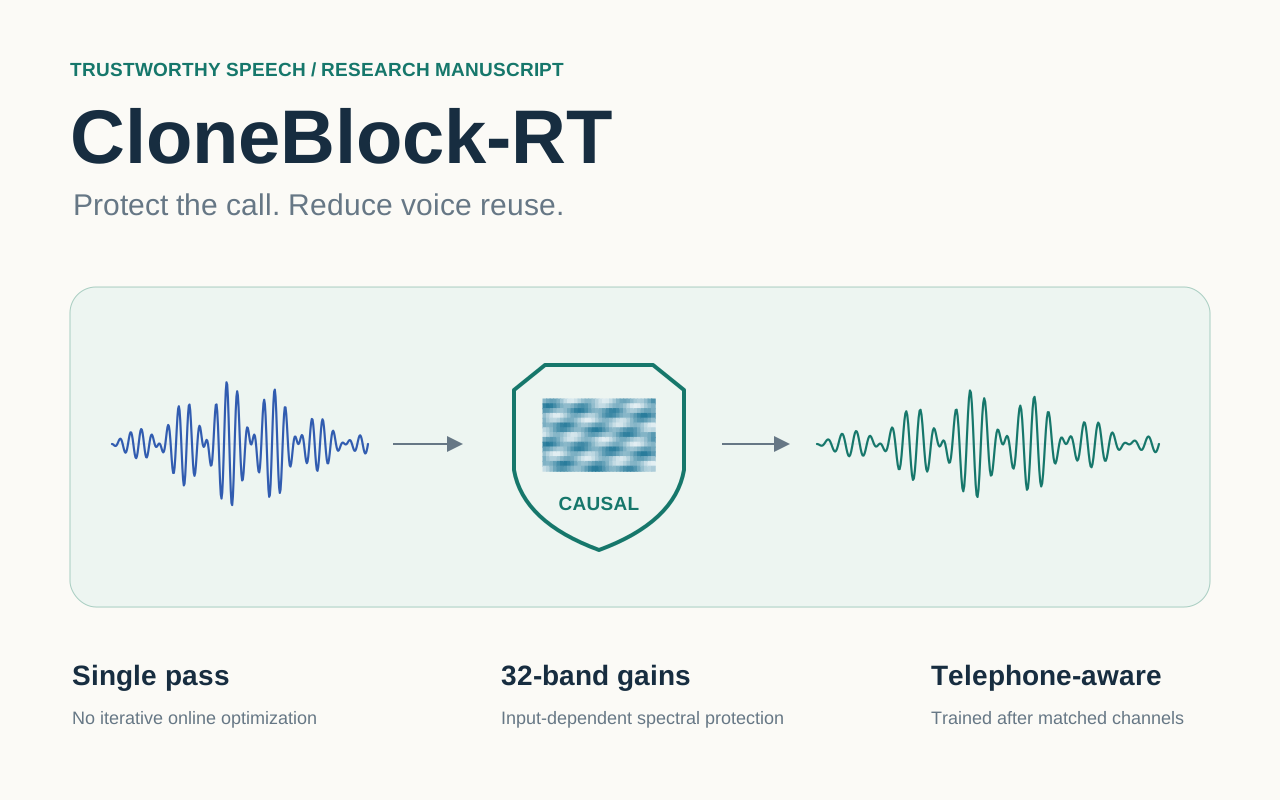
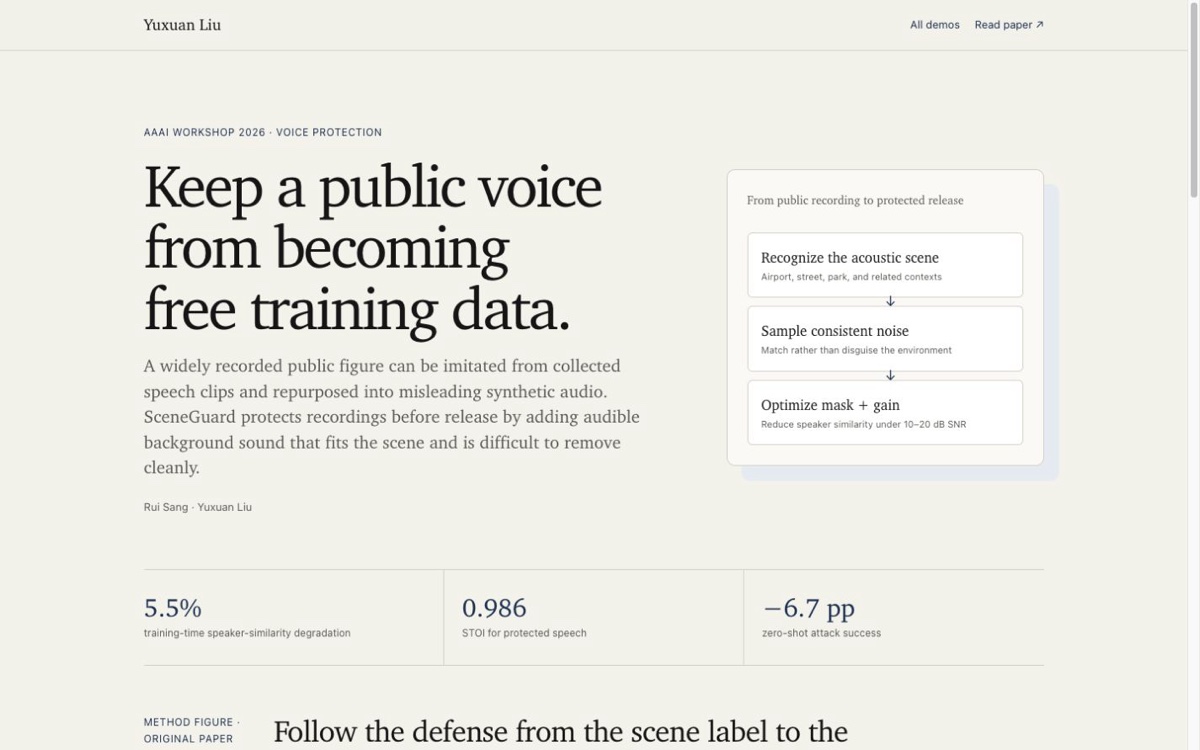
I develop membership-inference, adversarial, and voice-protection methods for generative audio. Membership inference asks whether a particular work was used to train a model.

Research to ProductCarry an idea from method to usable proof of concept.

As Principal Investigator of a Suzhou concept-verification project, I own model development, macOS product requirements, evaluation design, and user trials for a creator-facing music tool.

01 · Experience

Method development and end-to-end ownership.

The through-line is methodological: define the claim, design how it can fail, and carry the strongest result toward a usable system.

2023–2027
expected

Ph.D. Research · Trustworthy Generative Audio and Music AI

XJTLU

Develop membership-inference and auditing methods for generative audio and symbolic-music models, with particular attention to reliable identification at low false-positive rates.

Propose generative-inpainting attacks and perceptually aligned evaluation methods that test both technical effectiveness and what listeners can actually hear.

Sep 2025–
Aug 2026

Parameterized Score-to-Audio Expressive Rendering

Principal Investigator

Lead a PoC of the Suzhou Embodied Intelligence Future Education Concept Verification Center, owning expressive-rendering research, macOS product requirements, evaluation design, and user trials.

The system turns one MusicXML score into multiple performance styles and reached TRL 5 through small-scale validation in a relevant setting.

Explore the interactive PoC →
Nov 2020–
Jun 2021

Audio Processing Intern

Changba

Worked on singing-voice generation and enhancement for online karaoke applications through audio simulation, algorithm testing, and evaluation.

02 · Education

Engineering foundations followed by focused doctoral research.

Training across connected systems, cyber security, and intelligent engineering underpins my current work in trustworthy audio AI.

B.Eng. · 2017–2021

Beijing University of Posts and Telecommunications

Internet of Things Engineering

M.Sc. · 2021–2022

University of Warwick

Cyber Security Engineering

Ph.D. · 2023–2027 expected

Xi'an Jiaotong-Liverpool University

School of Intelligent Engineering

03 · Research

Selected work across security, perception, and audio understanding.

Each project pairs a technical mechanism with an evaluation question that makes the contribution falsifiable.

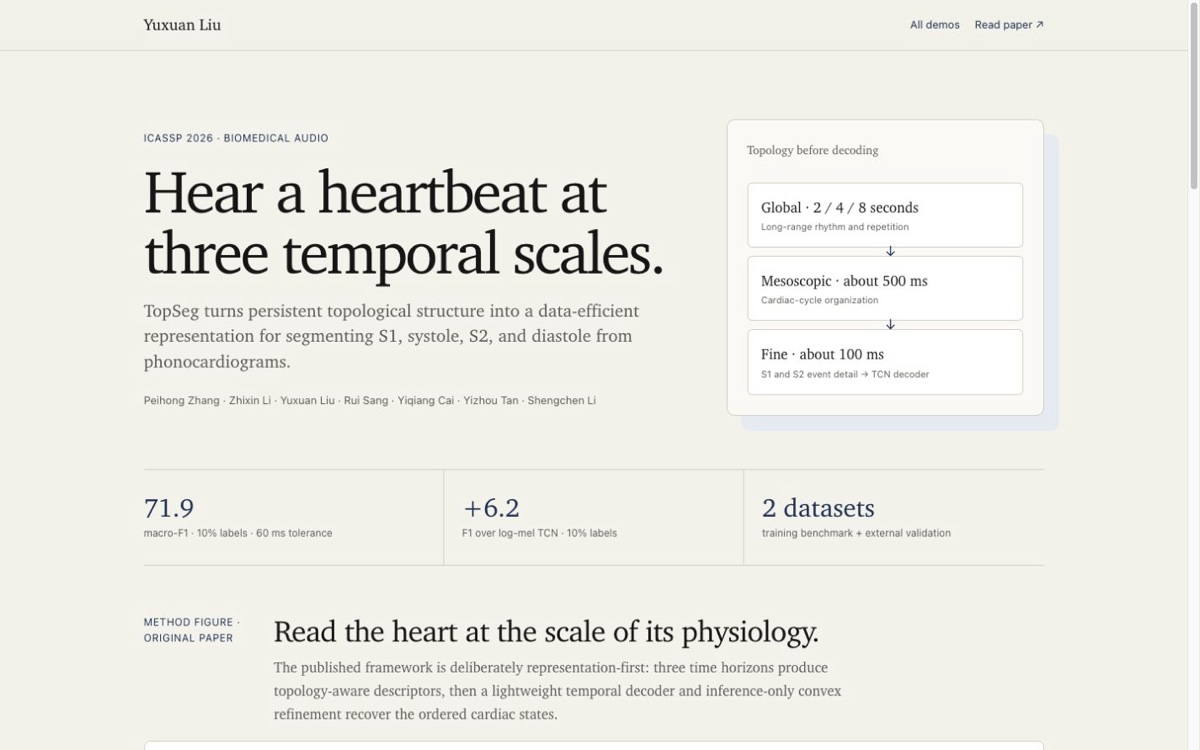
ICASSP 2026 · First author

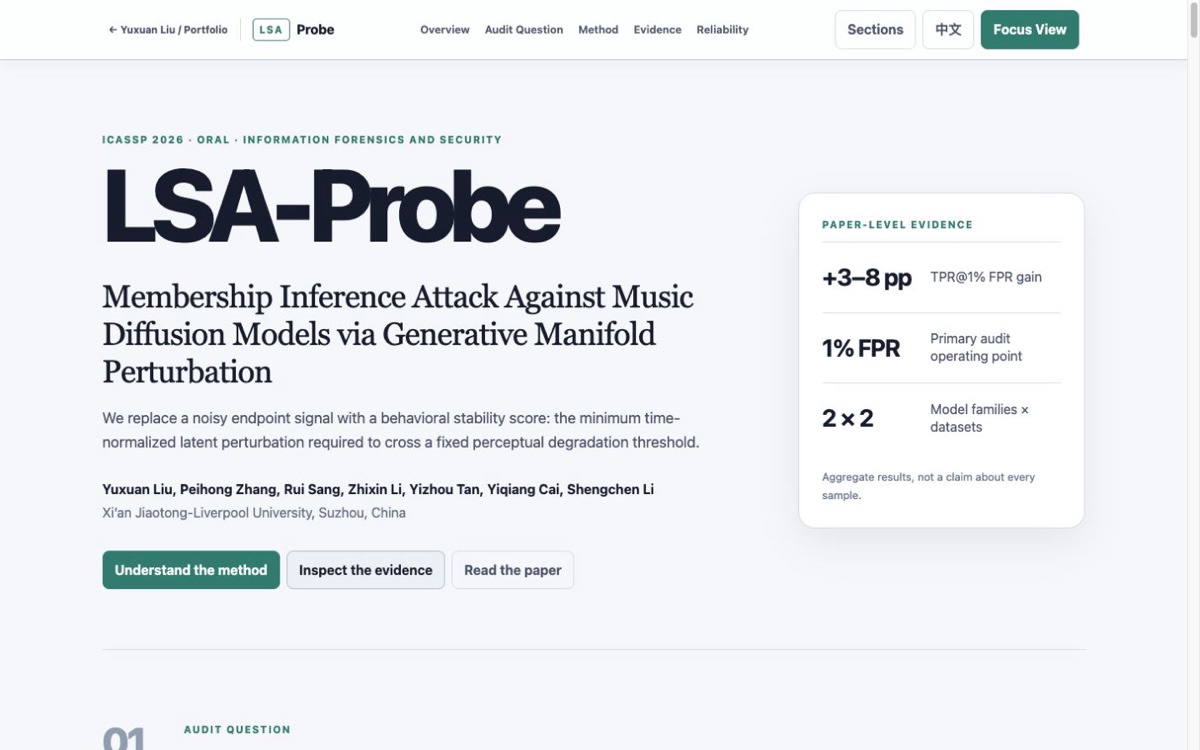
Auditing what a music diffusion model remembers

Membership inference determines whether a work was used in model training. I propose a generative-manifold perturbation method and evaluate identification where false positives must remain low.

Explore the interactive method →
ISMIR 2025 · First author

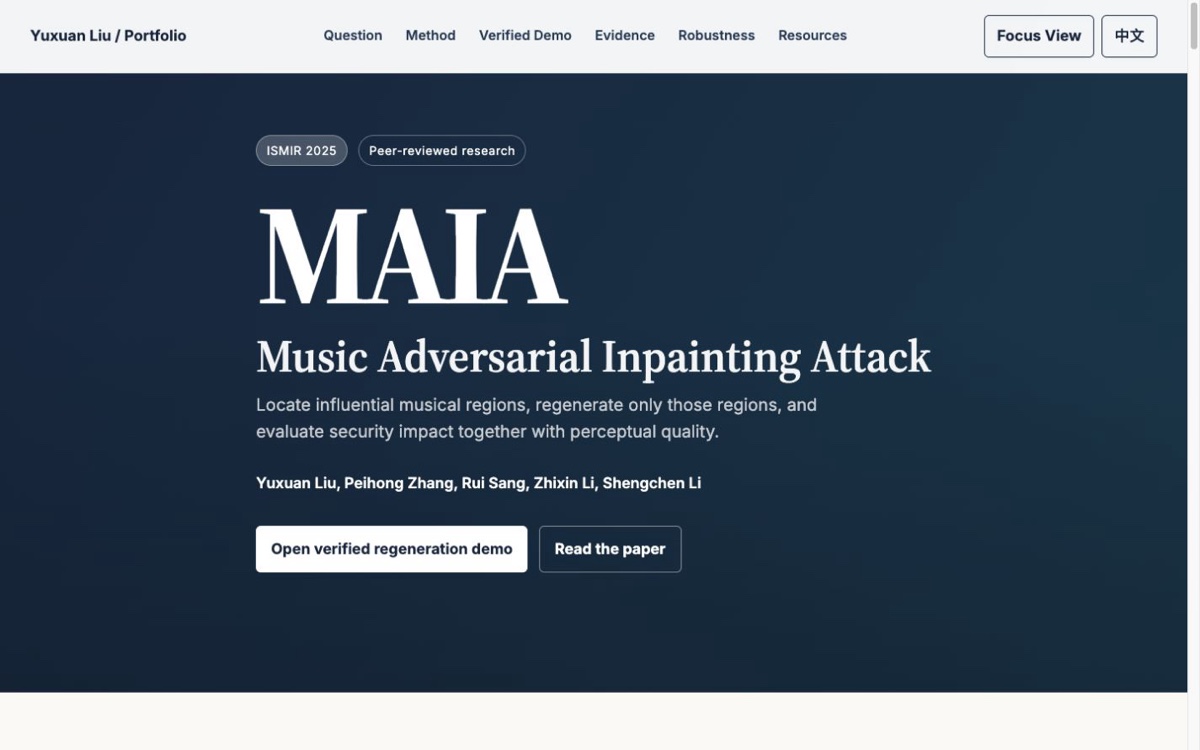
MAIA · Music adversarial inpainting attack

MAIA locates critical audio segments and uses generative inpainting to construct white-box and black-box attacks across music information retrieval tasks.

Listen to the examples →
AAAI Workshop 2026 · First author

Auditing what a symbolic music model remembers

TS-RaMIA turns token-level structural sensitivity into membership evidence, providing an auditable attack pipeline for symbolic music generation models.

Explore the interactive attack →
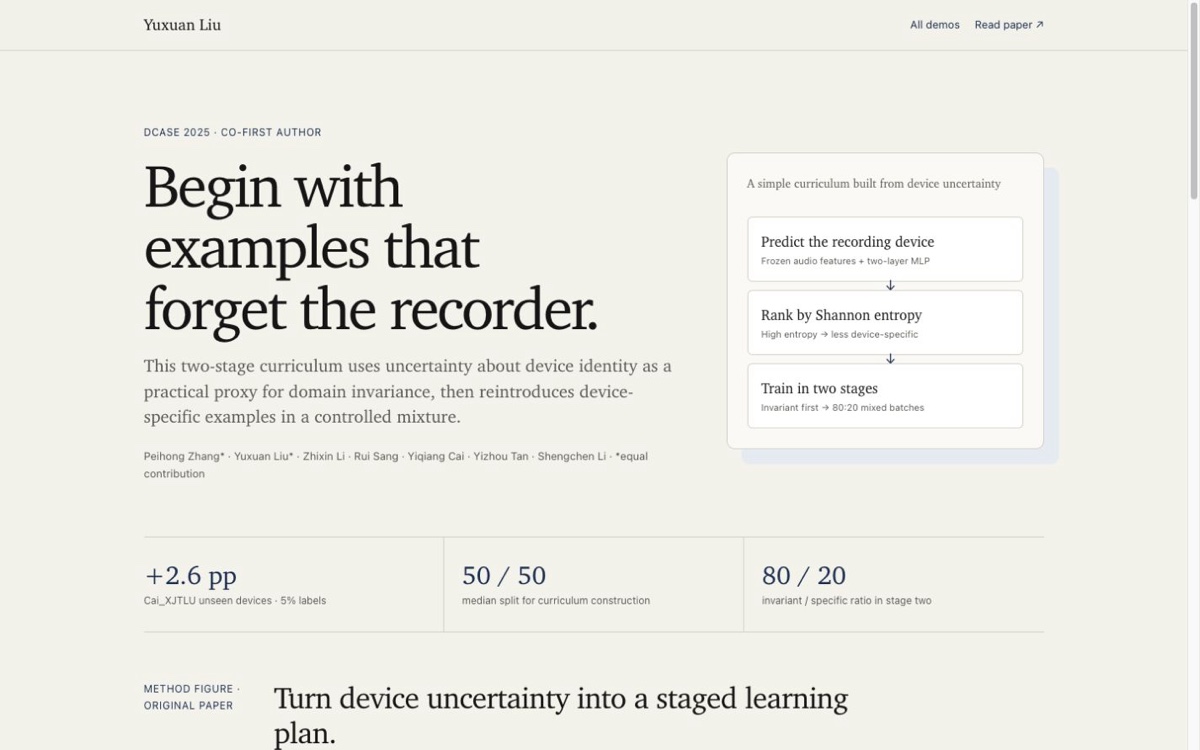
Co-first-author DCASE · ICASSP 2026

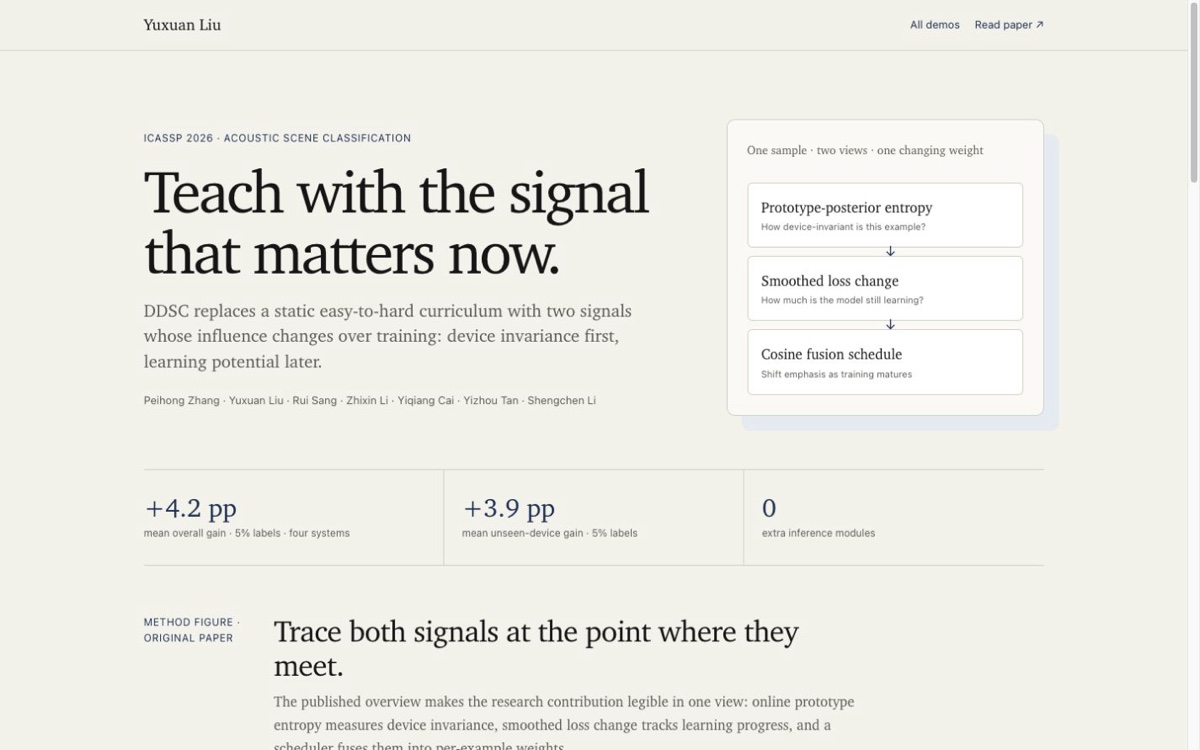
Data-efficient audio understanding under domain shift

Curriculum-learning methods use uncertainty and multiple training signals to prioritize useful samples when acoustic conditions and data availability change.

Explore the dynamic curriculum →

04 · Publications

Five first- or co-first-author papers lead an eleven-publication record.

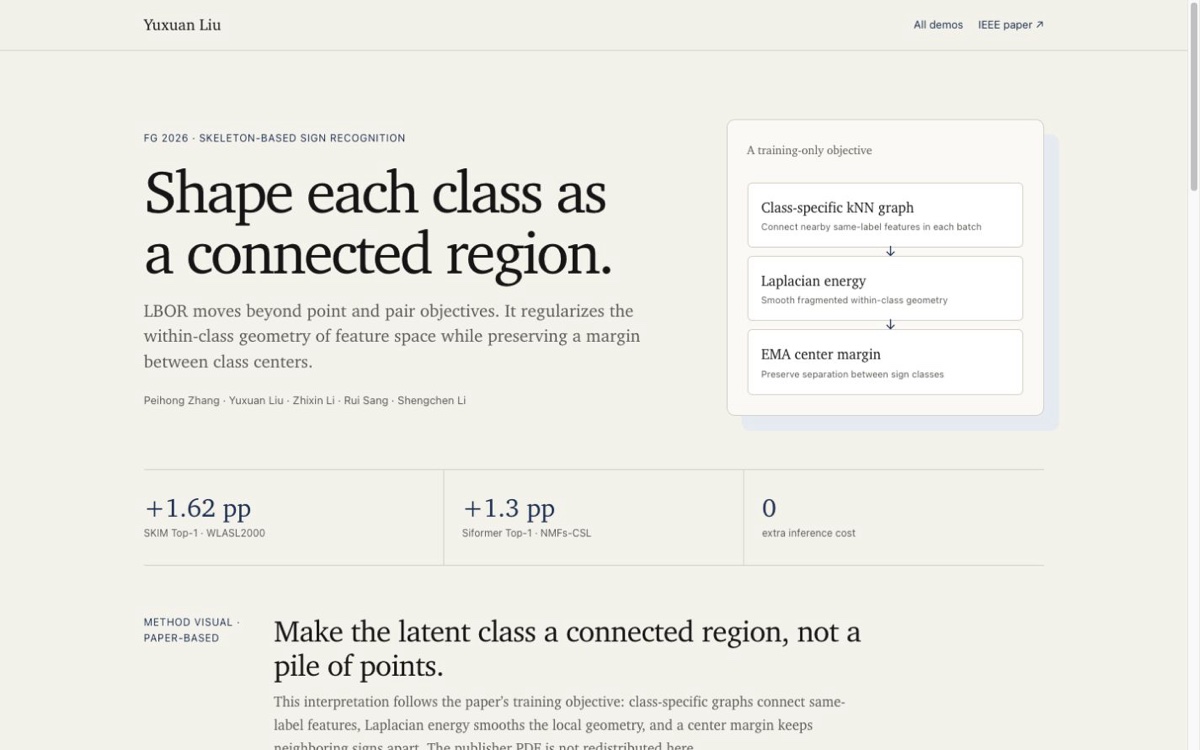
Selected venues include ICASSP, INTERSPEECH, ISMIR, AAAI Workshop, CMMR, FG, and DCASE.

ICASSP 2026
Membership Inference Attack Against Music Diffusion Models via Generative Manifold Perturbation.

Yuxuan Liu, P. Zhang, R. Sang, Z. Li, Y. Tan, Y. Cai, S. Li

IEEE International Conference on Acoustics, Speech and Signal Processing

ISMIR 2025
MAIA: An Inpainting-Based Approach for Music Adversarial Attacks.

Yuxuan Liu, P. Zhang, R. Sang, Z. Li, S. Li

International Society for Music Information Retrieval Conference

AAAI Workshop 2026
TS-RaMIA: Membership Inference Attacks for Symbolic Music Generation Models.

Yuxuan Liu, R. Sang, P. Zhang, Z. Li, K. Zhang, S. He, Y. Li, K. Xu, S. Li

AAAI Conference on Artificial Intelligence Workshop · PMLR 303:1–15

CMMR 2025
Training a Perceptual Model for Evaluating Auditory Similarity in Music Adversarial Attack.

Yuxuan Liu, R. Sang, P. Zhang, Z. Li, S. Li

International Symposium on Computer Music Multidisciplinary Research

INTERSPEECH 2026
CoRE: Contrastive Evidence-Aware Rescoring for Multiple-Choice Audio Question Answering.

P. Zhang, Z. Li, Yuxuan Liu, Y. Cai, Y. Tan, S. Li

Annual Conference of the International Speech Communication Association

INTERSPEECH 2026
Enhancing Temporal Prediction Consistency for Short-Duration Acoustic Scene Classification via Semantic Adversarial Training.

Y. Cai, Y. Tan, P. Zhang, Yuxuan Liu, S. Li, X. Shao

Annual Conference of the International Speech Communication Association

05 · Demos

Research that can be inspected and heard.

Ten active research and project pages expose the question, method, evidence, and evaluation boundary; audio examples are included where the underlying work supports them.

06 · Toolkit

Research depth with an engineering path to delivery.

The toolchain supports reproducible experiments, audio evaluation, research prototypes, and product-oriented iteration.

Generative Audio

Diffusion models, music and speech generation, symbolic music modeling, MusicXML workflows

Trustworthy AI

Membership inference, model privacy, copyright auditing, provenance, adversarial robustness

Audio Intelligence

Music information retrieval, audio signal processing, acoustic scene classification, perceptual evaluation

Machine Learning

Python, PyTorch, C/C++, MATLAB, experimental design, statistical analysis

Agent Toolchain

Codex, Cursor, and Claude Code for implementation, debugging, prototype iteration, and document automation

Research Communication

Academic writing, peer-reviewed publication, user-trial design, technical presentation
07 · Background

Quick answers for recruiters and collaborators.

What roles is Yuxuan targeting?

Machine-learning scientist and engineer roles in audio understanding, music intelligence, generative audio, and trustworthy AI.

When is Yuxuan available to start?

He expects to complete his Ph.D. in March 2027 and is targeting 2027 graduate or early-career hiring timelines.

What is the core research contribution?

Methods for auditing generative audio models, attacking and evaluating music systems, and aligning technical metrics with auditory perception.

Does the work include product ownership?

Yes. He is Principal Investigator for a MusicXML-to-audio PoC that reached TRL 5 and includes model, app, evaluation, and user-trial ownership.

Does Yuxuan have industry audio experience?

Yes. At Changba he worked on singing-voice generation and enhancement through audio simulation, algorithm testing, and evaluation.

Where can I find the complete publication record?

The selected list appears on this page and the complete record is linked through Google Scholar.

08 · Contact

Let’s build audio systems whose claims hold up.

Available from March 2027 for research scientist and machine-learning engineer roles in Singapore and internationally.